WE LIKE FRIENDS
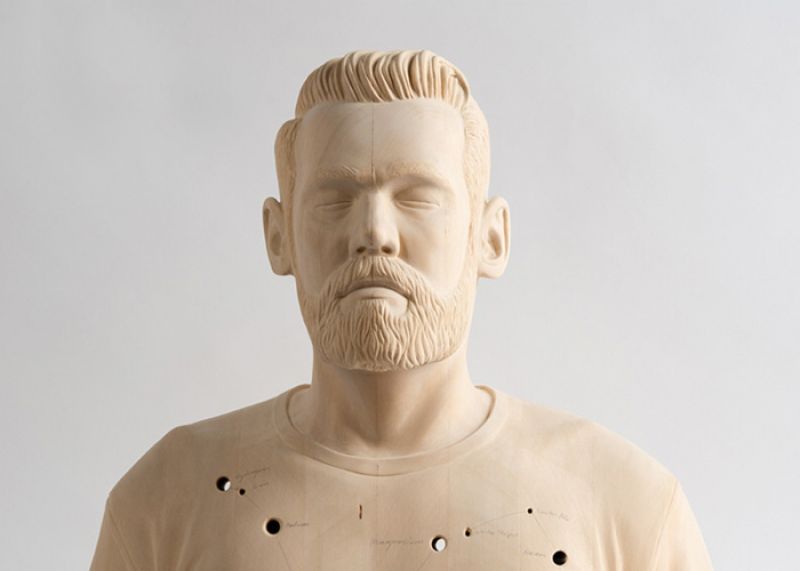 Paul’s work remixes the immaterial into the material, language into disassociation, the artists into the VJ – creation only happens when the natural flow is interrupted – when light is pulled in, when matter is enfolded, when stars die and babies cry. The spaces allow us time to catch breath. Paul’s work, though remixing the present, gives us (at least) two turns to capture the moment.
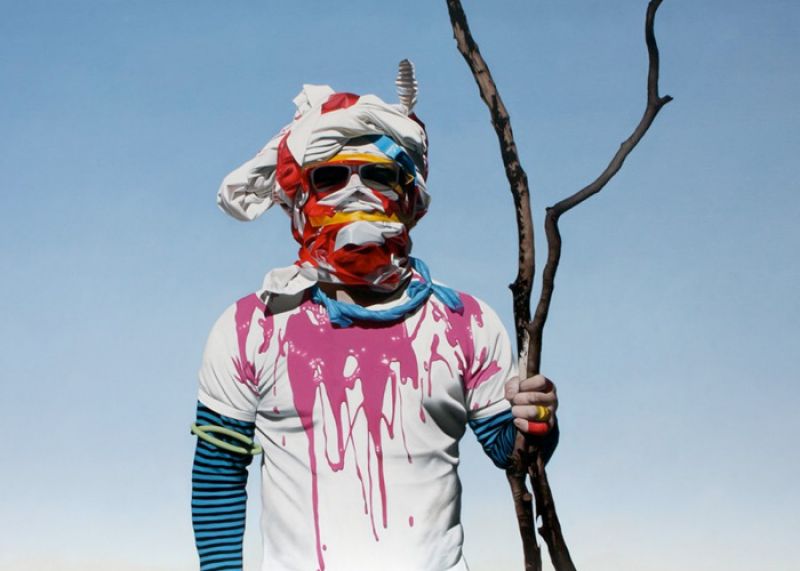 Juan Ford is pleased to annouce an upcoming exhibition at Art Taipei 2014. The exhibition of new work will commence a new relationship with Galerie Du Monde (Hong Kong). Established in 1974 Galerie Du Monde specialises in contemporary and modern artwork by international and Chinese artists.
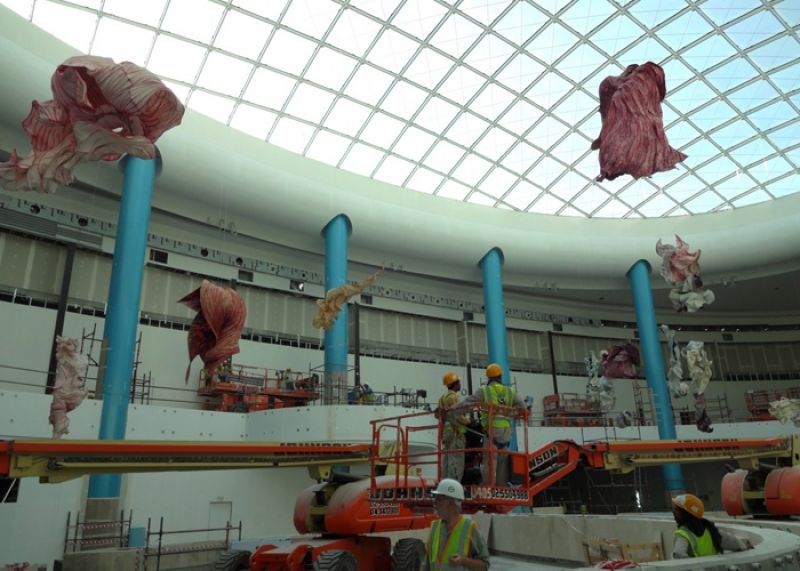
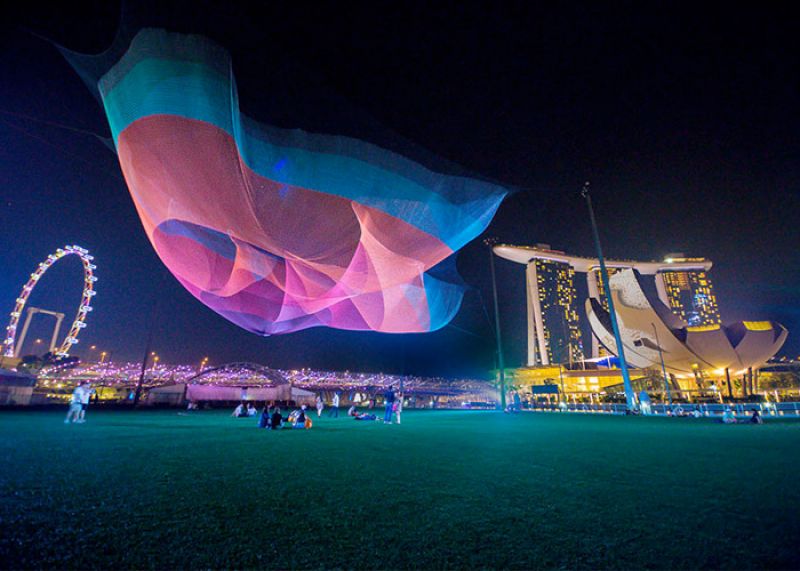 Janet Echelman builds living, breathing sculpture environments that respond to the forces of nature - wind, water and light - and become inviting focal points for civic life. Exploring the potential of unlikely materials, from fishing net to atomized water particles, Echelman combines ancient craft with cutting-edge technology to create her permanent sculpture at the scale of buildings.
 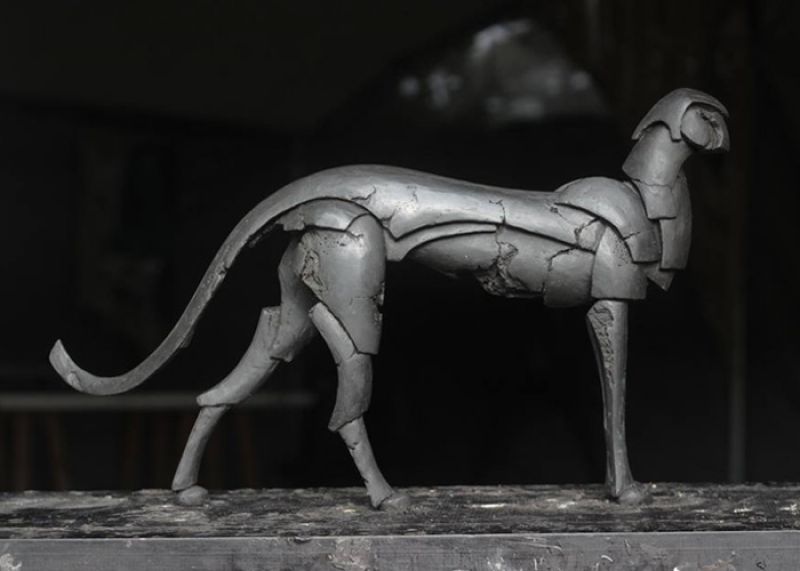 Calder sculpts both realistic and stylized forms. The realistic, figurative work is born out of his close association with nature. The more recent stylized, almost futuristic, work stems from the same source but explores new avenues of expression.
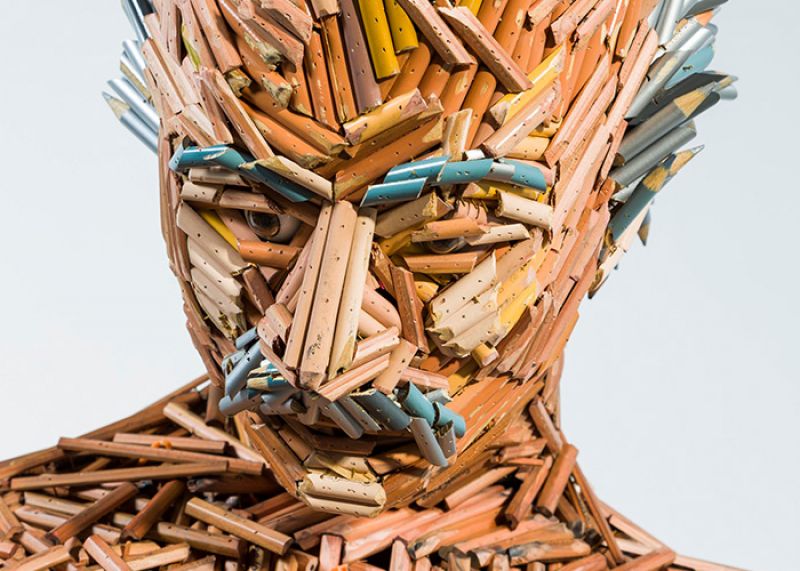 Born in Bogota, Colombia, Federico Uribe lives and works in Miami. His artwork resists classification. Rooted in the craft of sculpture and paint, it rises from intertwining everyday objects in all possible and surprising ways, but still with a formal reference to the history and tradition of classical art.
 I was born in Northern Minnesota in the US of A in the 1970's. I moved to Northern California in 1990. I have no formal art training.
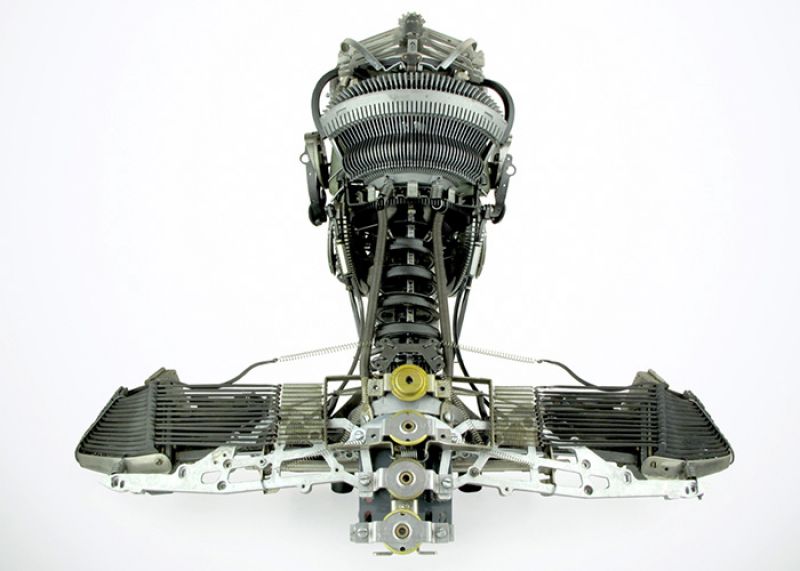
I disassemble typewriters and then reassemble them into full-scale, anatomically correct human figures. I do not solder, weld, or glue these assemblages together- the process is entirely cold assembly.
I was born in Northern Minnesota in the US of A in the 1970's. I moved to Northern California in 1990. I have no formal art training.
I disassemble typewriters and then reassemble them into full-scale, anatomically correct human figures. I do not solder, weld, or glue these assemblages together- the process is entirely cold assembly.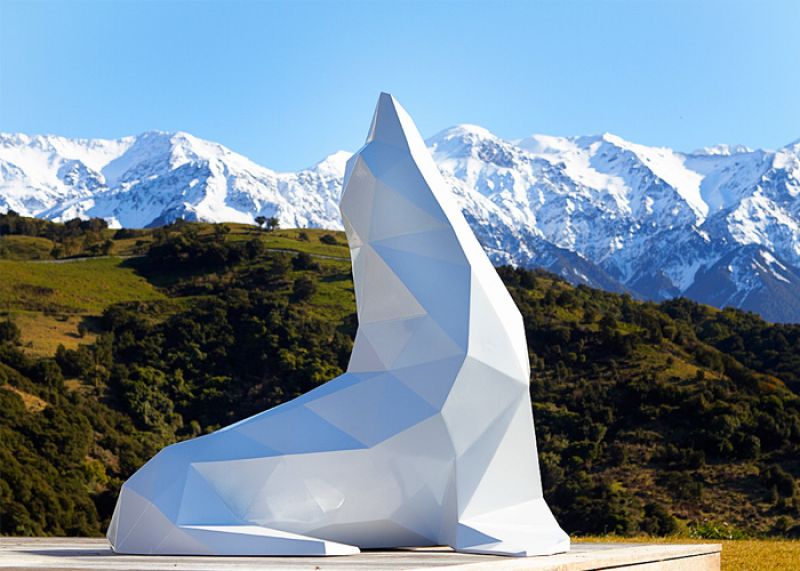
Ben Foster draws upon the physical landscape of home with his static, stylised figurative works mirroring the dramatic forms of the mountains which are his backdrop. Similarly, his kinetic abstract sculptures echo the restless coastal waters and winds which swiftly reshape the stony shores.
 I bring my love of nature, its materials and my fascination with technique together in my work.
Coming from a painting orientated culture, I found in paper fiber a material closer to nature and with much more character than I ever found in paint.
I bring my love of nature, its materials and my fascination with technique together in my work.
Coming from a painting orientated culture, I found in paper fiber a material closer to nature and with much more character than I ever found in paint.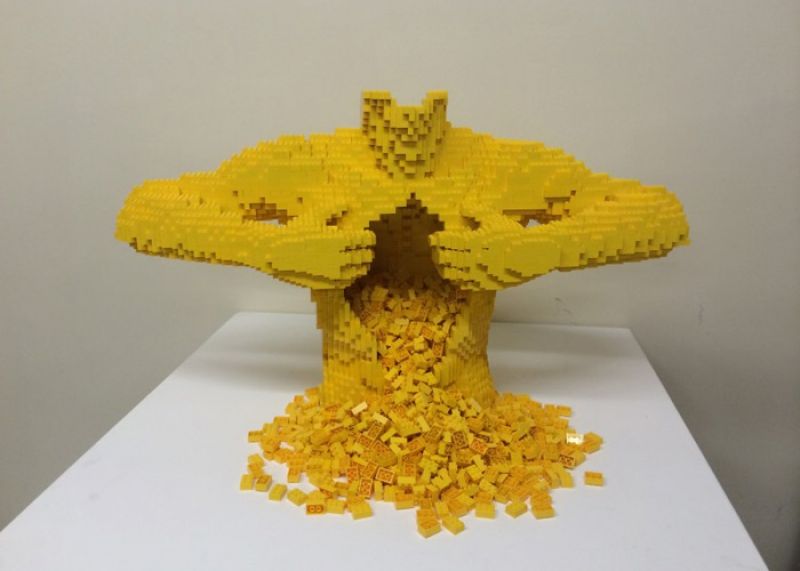 Nathan Sawaya is a New York-based artist who creates awe-inspiring works of art out of some of the most unlikely things. His recent global museum exhibitions feature large-scale sculptures using only toy building blocks. LEGO® bricks to be exact. A full-time independent artist, Sawaya accepts commission requests and shows his art in galleries in New York, Miami and Maui.
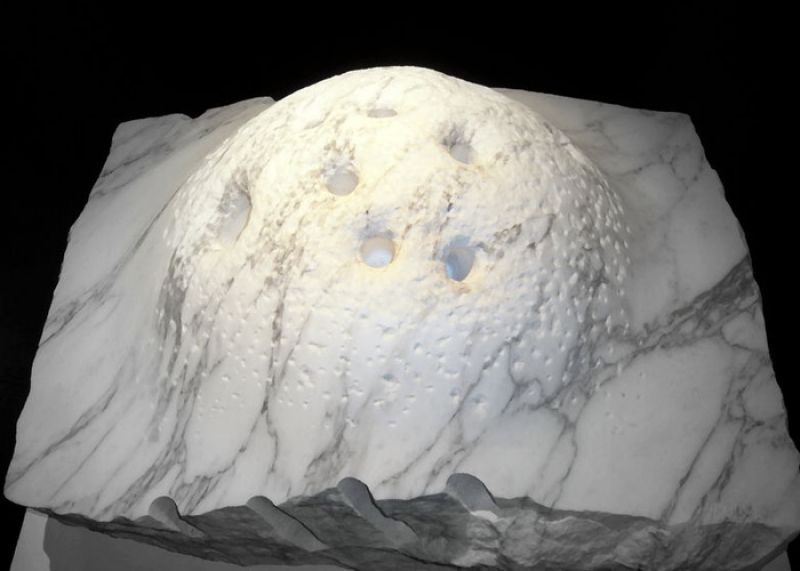 Tetsuo HARADA was born august 25th 1949 in Niitsu, Niigata prefecture in Japan.
In highschool in Niitsu, he learned drawing with his professor M. Nitta.
In 1973, he traveled throughout Europe.
Today, he has a studio in Paris and another near Chartres at Fresnay l’Evêque, Eure-et-Loir, France.
Tetsuo HARADA was born august 25th 1949 in Niitsu, Niigata prefecture in Japan.
In highschool in Niitsu, he learned drawing with his professor M. Nitta.
In 1973, he traveled throughout Europe.
Today, he has a studio in Paris and another near Chartres at Fresnay l’Evêque, Eure-et-Loir, France.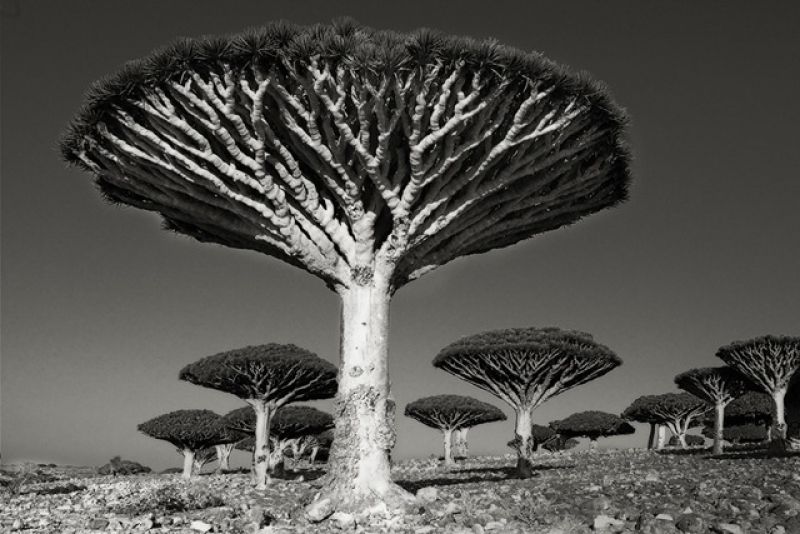 American born, Beth Moon has gained international recognition for her large-scale, richly toned platinum photographs. Since 1999, her work has appeared in more than 60 one-person and group exhibitions in the world, and has received critical acclaim in numerous national and international fine art publications.
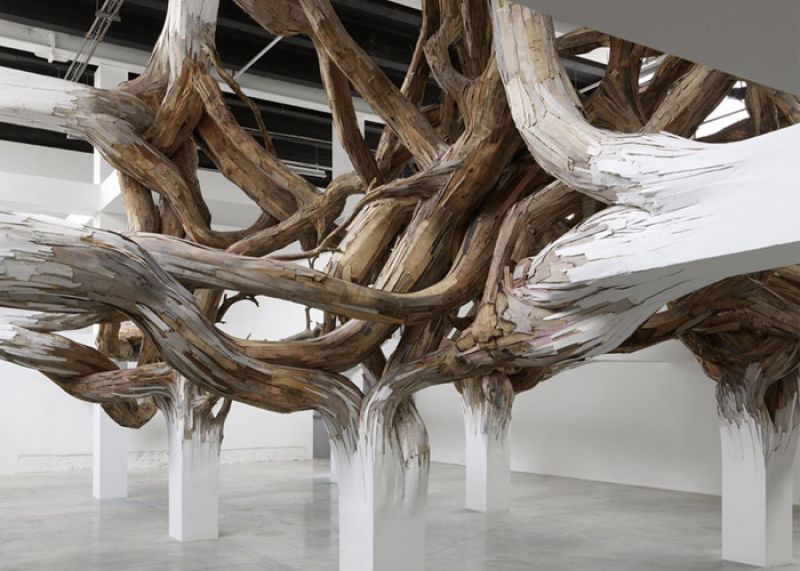 Lives and works in São Paulo. Oliveira apparently blows up a free-floating loaded brushstroke so that it achieves architectural scale. Since nothing quite like this is in fact possible, our experience of the work on site comes with a built-in double-take, as our sustained examination begins to reveal the extent to which such an elaborate construction possesses a remarkable level of design.
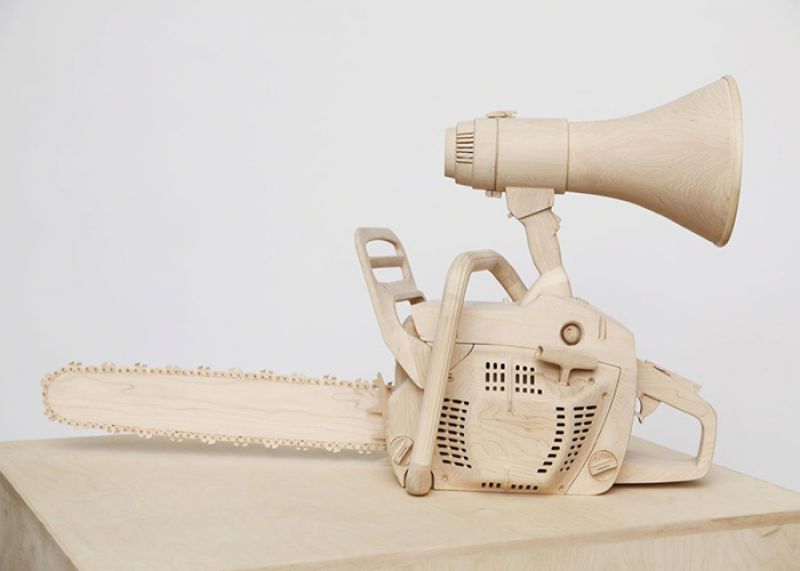 Since 1989, Roxy Paine has been filling galleries, museums, and sites worldwide with his dark, whimsical installations and sculptures, melding the industrial and the organic to explore manmade and natural systems - and their ramifications. As he describes: “I’m skeptical about the potential for horrible consequences, consistently realized.
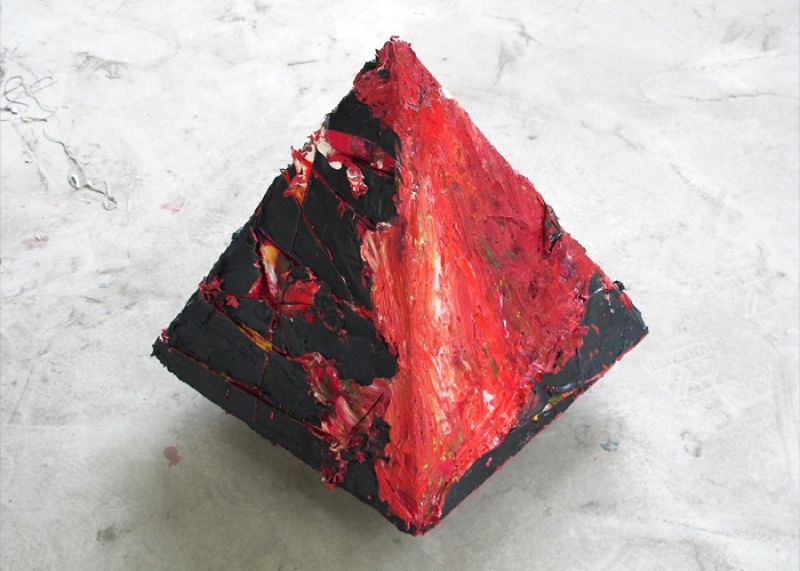 Yeoh Choo Kuan’s abstract paintings rely on figurative associations for the meaning to be legible. His earlier works display strong formal influence from Abstract Expressionism and Expressionism. The artist has stated that this new body of works, which is in a process of development, disregards the element of pictorial narration, which was previously a dominant feature in his works.
 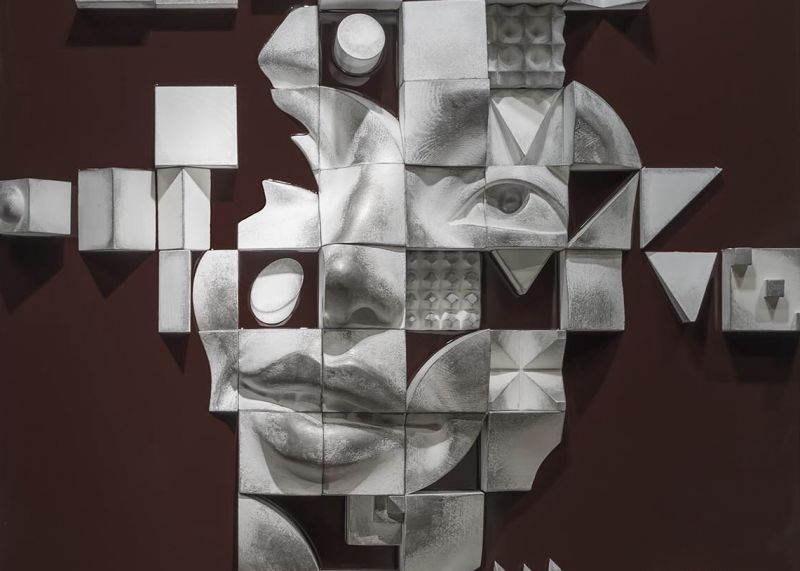 Get close enough and the architecture of an individual life reveals itself. There! High points, empty holes of loss, the spiral of circular questions, the sturdiness of solid beliefs. There I am, looking back at myself. I am inseparable from the landscapes, patterns, and flow of life that make me this way. Just as Cubism in painting radically rearranged the building blocks of perspective and introduced another way of seeing.